Science
Joanna Blaszczyk
01 June 2021

Heavy Concrete for Radiation Shielding: A Powerful Combination

Industrial users have brought barite-enriched concrete to the VESUVIO beamline to test the effectiveness of its radiation shielding at lower neutron energies

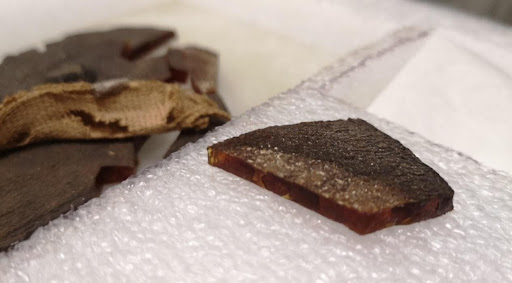
Standard concrete remains the most commonly used construction material, even though dense (or heavy-weight) concrete can often offer better performance, cost efficiency, and shorter construction times. Heavy-weight concrete is particularly advantageous for radiation shielding, or wherever a density greater than 2600 kg/m³ is required. It is also preferred when structures need additional weight within limited space, such as in counterweights or coastal protection blocks.

In medical physics, facilities like cyclotrons and high-energy linear accelerators require substantial shielding from the neutrons and gamma rays generated during operation. For this reason, aggregates containing heavy elements — such as barite (BaSO₄) or magnetite (Fe₃O₄) — are often used in the production of heavy-weight concrete. The goal is to reduce wall thickness while maintaining optimal radiation protection.

By using heavy concrete, up to 40% of wall thickness can be eliminated compared with ordinary concrete. However, determining the optimal barite concentration is crucial for achieving effective shielding in environments exposed to both gamma and neutron radiation.

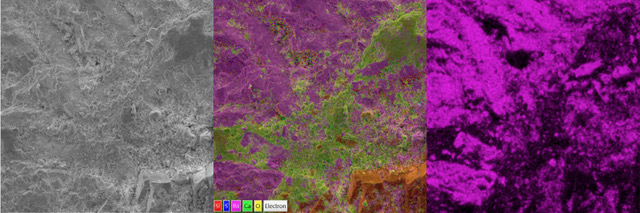
To address this challenge, researchers carried out a unique combination of scanning electron microscopy (SEM), energy-dispersive X-ray spectroscopy (EDS), and neutron transmission experiments to investigate the atomic-scale structure and neutron-shielding behaviour of heavy concrete.

In a study published in EPJ Plus, industrial researchers from Mardel s.r.l., in collaboration with Bariblock – SVA s.r.l., worked with ISIS@MACH ITALIA (University of Rome Tor Vergata Unit) and scientists from the ISIS Neutron and Muon Source (UK). The team performed morphological and chemical analyses, complemented by broad-energy-range neutron transmission measurements on barite-enriched concrete samples using the VESUVIO spectrometer at ISIS.

The precision of these measurements was enhanced by parallel neutron tests conducted by the IMI Unit Facility at the University of Milan Bicocca, where new double ceramic thick GEM detectors were successfully commissioned on VESUVIO using the IMI Neutron Gate. “The first results are very promising,” noted Gabriele Croci, a member of the development team.

By combining EDS and neutron transmission data, the researchers demonstrated a correlation between barium and hydrogen content: samples with higher barium concentrations showed lower hydrogen levels. This is likely due to the reduced formation of calcium–silicon–hydrate (C–S–H) structures, which are inhibited by the presence of barite.

“This investigation allows manufacturers and radiation protection designers to evaluate the optimal barite concentration to maximise mechanical properties while balancing radiation shielding,” said Marco Martellucci of Mardel s.r.l.

Complementary deep, in-bulk neutron transmission measurements on VESUVIO provided absolute cross-section data for ten different concrete densities, correlating performance with barite content. According to Enrico Preziosi (IM@IT, University of Rome Tor Vergata), “Microscopic spatial chemical maps enhance our understanding of how fabrication methods influence the expected performance of these barium-enriched concretes.”

Giovanni Romanelli (ISIS Facility) added:

“Not only do we see the correlated effects of barium and hydrogen content, but we can also begin to envisage standardising neutron transmission capabilities for structural materials used in medical physics and reactor sciences.”

These combined studies mark an important step toward the reliable characterisation of large-scale structural materials used in high-radiation environments. As Roberto Senesi (IM@IT, University of Rome Tor Vergata) concluded:

“This powerful combination of techniques could significantly influence the design of radiation-shielding structures, while deepening our understanding of the complex chemical and physical nature of specialised concrete fabrication.”

Further information:

IM@IT Unit University of Rome Tor Vergata, Mardel s.r.l., Bariblock – SVA s.r.l.


"Concrete isn’t just for construction — in medical and nuclear facilities, heavy-weight concrete enriched with barite can shield against intense radiation. Using neutron spectroscopy and electron microscopy at ISIS@MACH ITALIA and ISIS (UK), researchers uncovered how barite concentration affects hydrogen content and overall shielding performance, paving the way for smarter, safer radiation protection materials."