Science
Joanna Blaszczyk
27 October 2020

Recreating the physical and chemical condition of Mariana Trench on Earth

Scientists from Rome Tor Vergata and ISIS have used the Vesuvio spectrometer to unravel part of the mystery behind the physical and chemical conditions of the Mariana Trench - one of the most extreme environments in the world.
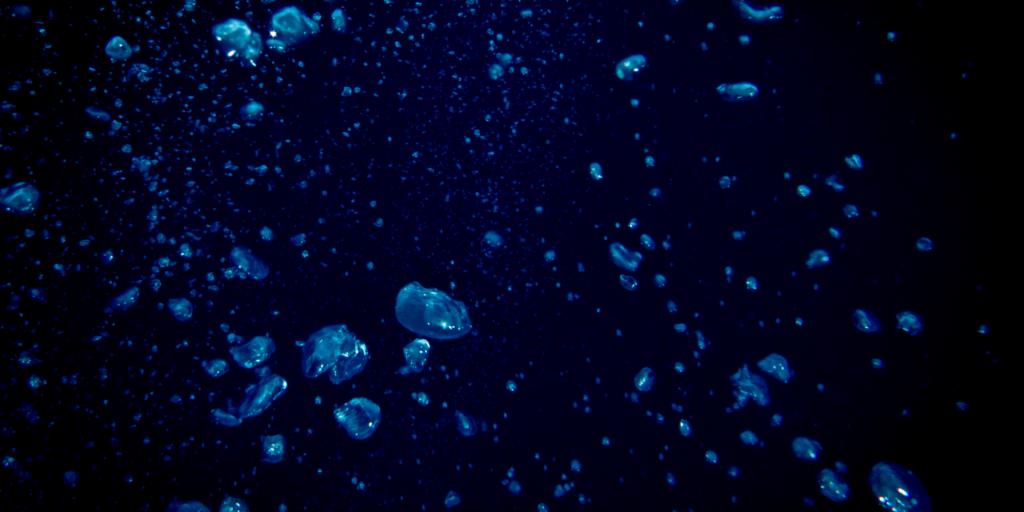

While humanity has reached the Moon and scaled Mount Everest, only a handful of people have ever descended to the deepest point on Earth — the Challenger Deep, in the Mariana Trench. Its name alone hints at the extreme difficulty of studying this crescent-shaped “scar” that cuts across the Pacific Ocean floor.

Since more than 70 percent of our planet is covered by oceans, it’s no surprise that scientists are drawn to understanding them — not only in terms of marine biology and climate change, but also through the physics and chemistry of the water itself.

Researchers from the University of Rome Tor Vergata, the ISIS Neutron and Muon Source, and ISIS@MACH Italia designed an innovative experiment that recreated the extreme conditions of the Challenger Deep using the VESUVIO spectrometer at ISIS.

By applying Deep Inelastic Neutron Scattering (DINS), the team measured the kinetic energy of hydrogen atoms in water under these immense pressures. In the trench, seawater exists under significantly higher pressure and contains far more salt than surface water.

Their results revealed that pressure and salinity exert opposing effects on the mean kinetic energy of hydrogen nuclei: higher pressure increases the energy, while greater salinity decreases it. These shifts also influence the proportion of hydrogen that exists as deuterium, the heavier isotope of hydrogen.

Understanding such extraordinary conditions offers valuable insight into how bacteria and other life forms adapt to extreme high-pressure environments. Moreover, conducting high-energy neutron experiments on instruments like VESUVIO advances research into the quantum-mechanical behavior of water — one of the most fundamental substances on Earth.

Further Information:

The full paper can be found here: https://doi.org/10.1063/5.0021926​

"At the deepest point on Earth — the Challenger Deep — water experiences crushing pressure and high salinity. Using DINS on the VESUVIO spectrometer, scientists from ISIS@MACH Italia and partners recreated these extreme conditions, uncovering how hydrogen atoms behave under pressure and how life can adapt in the ocean’s most hostile environments."