Studying cosmic ray induced failure mechanisms in electronic devices

I recently had the opportunity to speak with Dr. Francesco Pintacuda, a designer and researcher at STMicroelectronics, who specialises in studying how radiation from space and the atmosphere affects power electronic transistors. Over the past six years, he has been investigating the failure mechanisms in electronic components caused by cosmic ray interactions. His work supports the automotive, aerospace, and space industries, helping them understand particle collisions in electronics and develop more robust, radiation-resistant devices.
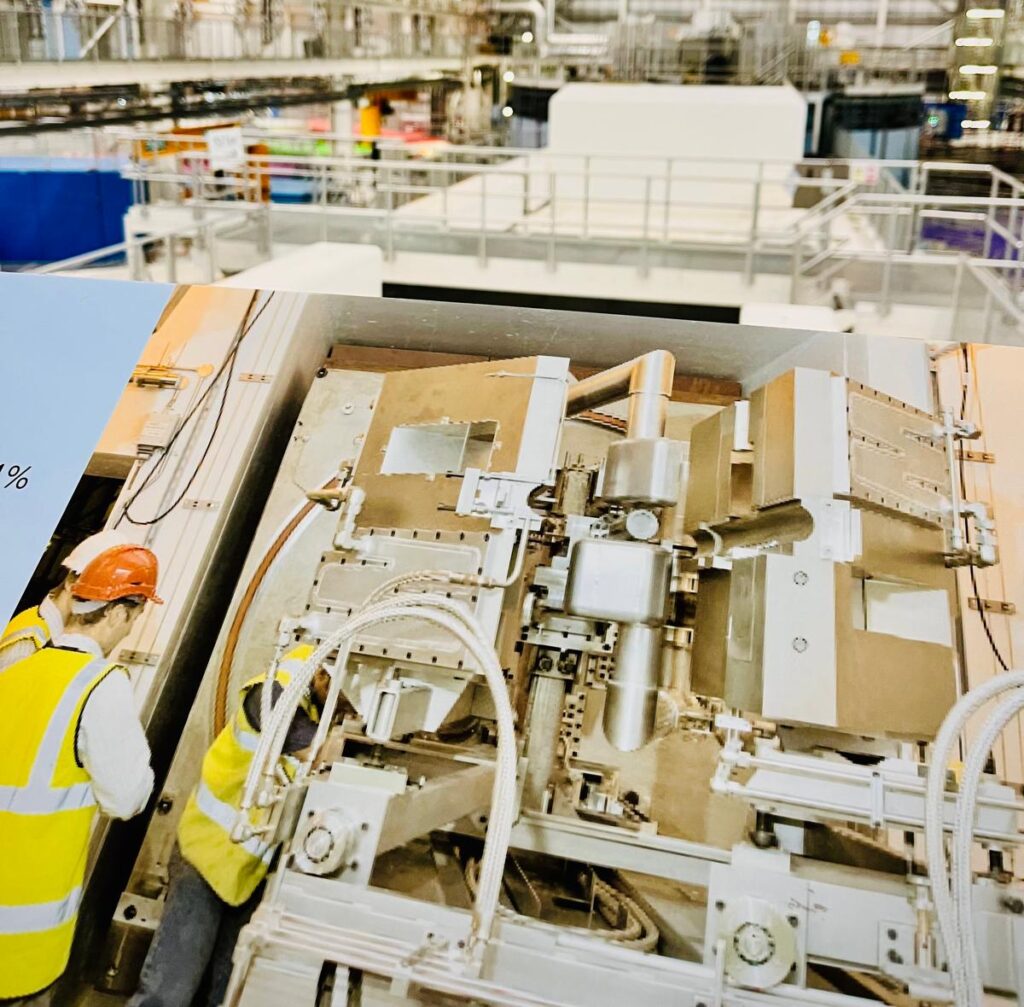
To carry out this kind of research, Dr. Pintacuda needs frequent access not only to chip irradiation instruments such as ChipIR at the ISIS Neutron and Muon Source, but also to smaller and medium-scale instruments — including scanning electron microscopes and X-ray diffractometers. This is how he first encountered the ISIS@MACH ITALIA infrastructure, which offers industrial users the opportunity to apply for time on more than sixty different instruments dedicated to materials analysis.
Given the wide range of techniques required to analyse failure mechanisms in electronics, collaboration with specialist instrument scientists is essential. As Dr. Pintacuda explained:
“I had been working with ChipIR for a while, and it was clear we needed to expand our methodology. I contacted the ISIS@MACH ITALIA group — Triestino Minniti and Giovanni Romanello — and explained the instruments and expertise I needed. They involved colleagues from other units to help refine the details of our experimental approach.”
As an industrial user, he was particularly interested in learning about the latest instruments and analytical techniques emerging in this rapidly evolving field — an area where ISIS@MACH ITALIA proved to be an ideal partner. Collaborations with industrial researchers are a key part of the IM@IT mission, enabling both users and instrument scientists to exchange expertise and apply advanced analytical tools to new technological challenges.
Having already completed several experiments through the programme, Dr. Pintacuda expressed strong satisfaction with his experience:
“It was very easy and transparent. After my tomography experiment, there was a large amount of data to process, and I was very pleased with the support I received for the analysis as well.”